
How to Check Criminal History in Teller County
No single Teller County search produces every official record. Start by deciding whether the goal is a statewide fingerprint-linked history, a filed court outcome, a current jail status, or the report written by an arresting officer. For a broad Colorado name check, use the CBI Internet Criminal History Check. For a Teller case, ask the Combined Court clerk for the register of actions or disposition. The sheriff holds its own incident and detention records, while Woodland Park and Cripple Creek keep reports made by their police departments.
Gather a full legal name, date of birth, aliases, an approximate event date, and a case or report number when known. Common names can return more than one paid ICHC result. A spelling mismatch can also hide a jail entry. Compare identifiers with care, then use fingerprints when positive identity is essential for reviewing your own Colorado history.
- Identify the record type and the agency that created it.
- Search CBI ICHC for a Colorado name-based history, or contact the relevant local custodian.
- Match names and birth dates without treating a name match as positive identification.
- Obtain the court disposition, booking file, or agency report that supplies context.
- Order a certified court copy or fingerprint self-check when the purpose calls for an official product.
Teller County Records Use Two Hubs
Teller County criminal records are physically split between Cripple Creek and Divide. The historic 1904 courthouse at 101 W. Bennett Avenue houses the Combined Court and its clerk. The Teller County Sheriff's Office is at 11400 U.S. Highway 24 in Divide, with the detention lobby at 288 Weaverville Road. The elected County Clerk and Recorder is not the court clerk. Property filings and elections may share courthouse geography, but criminal pleadings and judgments belong to the Judicial Branch clerk.
The official Teller County government gateway shows the county's department structure. Its screen also helps explain why a trip to the county seat will not produce a sheriff incident report held in Divide.
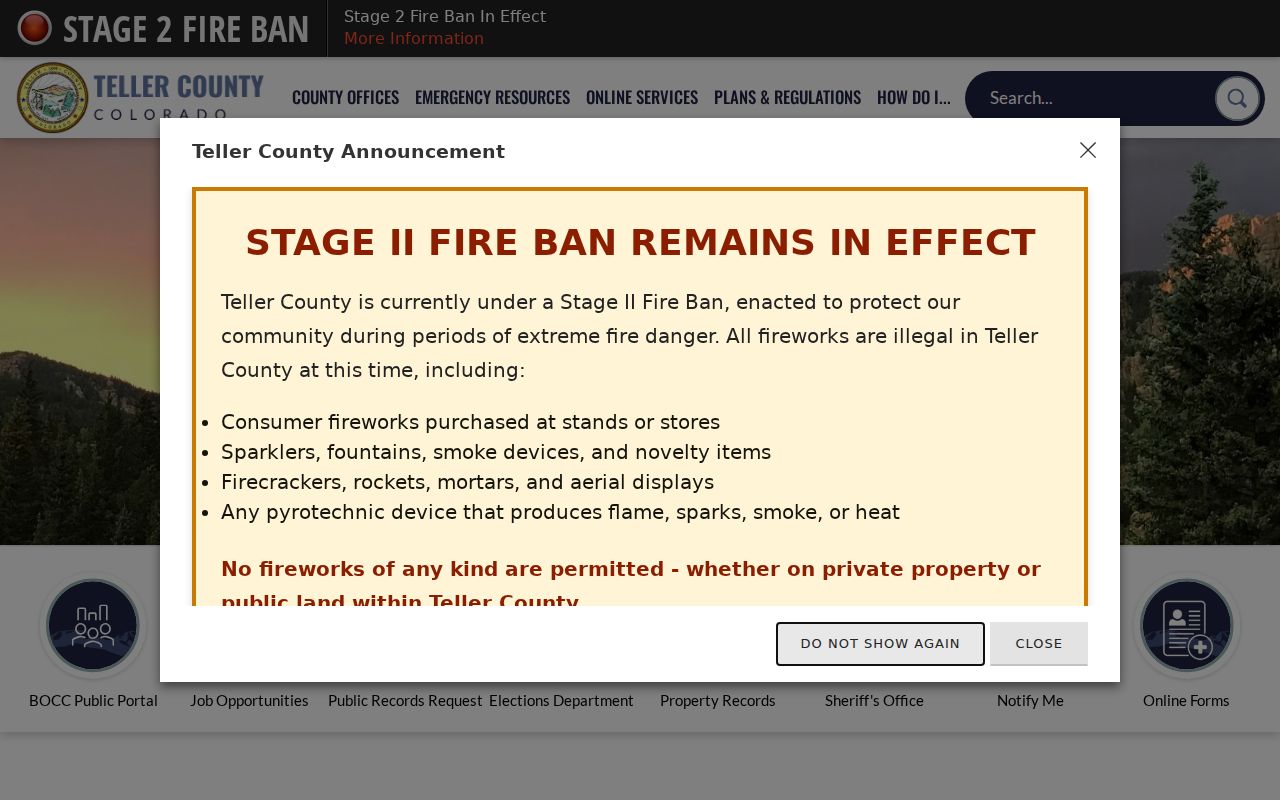
Use that division as the first routing rule: court event and outcome questions go to the judicial clerk; sheriff reports, jail files, and current custody questions go to TCSO.
Teller Combined Court
101 W. Bennett Avenue
Cripple Creek, CO 80813
719-689-7360
Teller County Sheriff
11400 U.S. Highway 24
Divide, CO 80814
719-687-9652
Official Colorado Background Checks
The Colorado Bureau of Investigation maintains fingerprint-supported Colorado Criminal History Record Information. Its ICHC product is a Colorado-only name search, not a national check. Each downloaded result costs $6, and opening several possible matches creates a separate charge for each. A staff-processed CHRI request costs $13 and can be notarized. These products may omit sealed records, most juvenile arrests, traffic arrests before age sixteen, and events that never reached CBI through fingerprints or later disposition reporting.
A personal fingerprint self-check uses Colorado Applicant Background Services and an approved IdentoGO or Colorado Fingerprinting collection site. CBI's charge is $16.50 plus the vendor collection charge. The CBI fees and forms page distinguishes the products and routes applicants to the right channel.
| Official product | Base state fee | Best use |
|---|---|---|
| ICHC downloaded result | $6 each | Public Colorado name search |
| Staff-processed CHRI | $13 | Staff result, with notarization on request |
| Fingerprint personal check | $16.50 plus vendor | Review of your fingerprint-linked Colorado record |
The official ICHC explanation shows the portal's scope and limits.
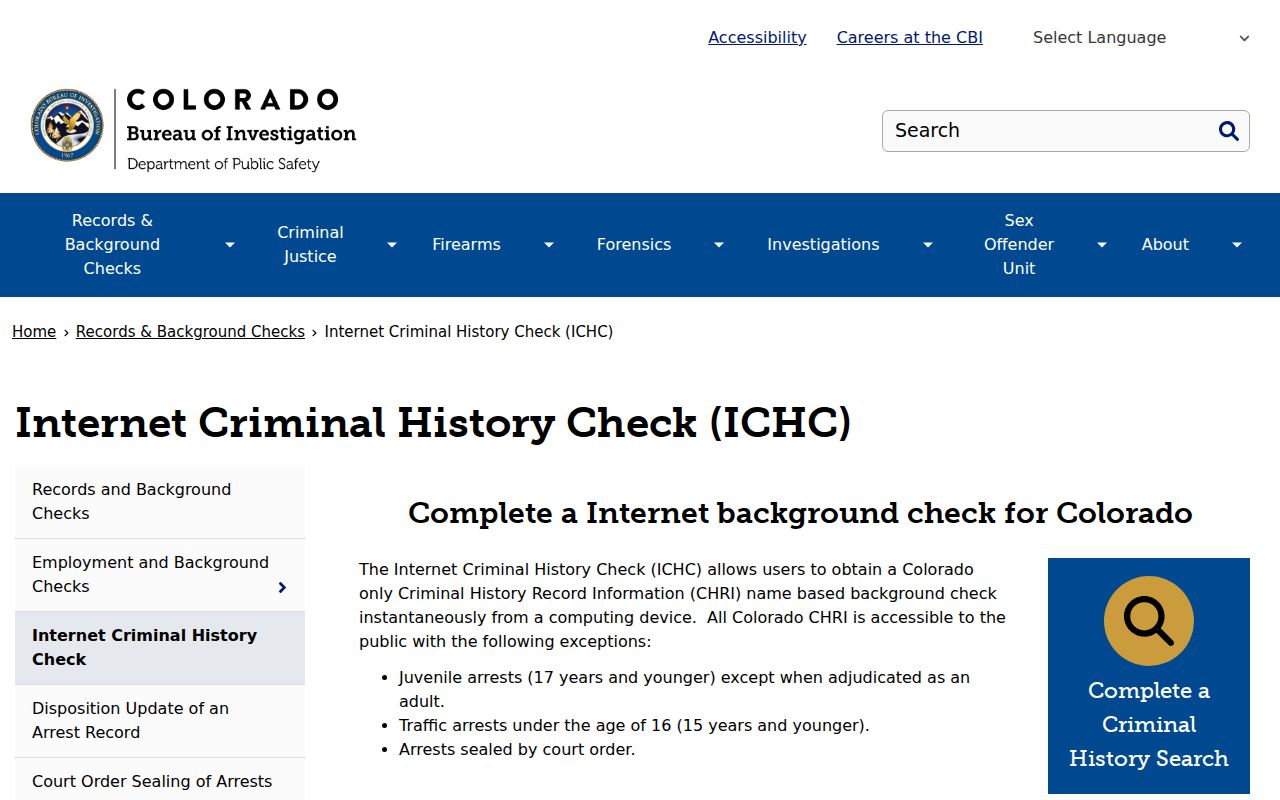
This state guidance should be read before paying for a Teller County name match.
Teller County ICHC Search Fields
ICHC asks for enough detail to narrow a name, but it does not turn typed data into fingerprint identification. Required entries include last name, first name, date of birth, and payment details. Middle name, suffix, gender, race, Social Security number, and an optional reference can refine or label the request. The system also requires acceptance of terms and a human-verification step.
| Field | Required | Use |
|---|---|---|
| Last and first name | Yes | Primary name match |
| Date of birth | Yes | Narrows likely results |
| Middle name and suffix | No | Separates similar names |
| Gender, race, SSN | No | Additional matching data |
| Reference | No | Labels the transaction |
The live ICHC interface is the payment and result route.
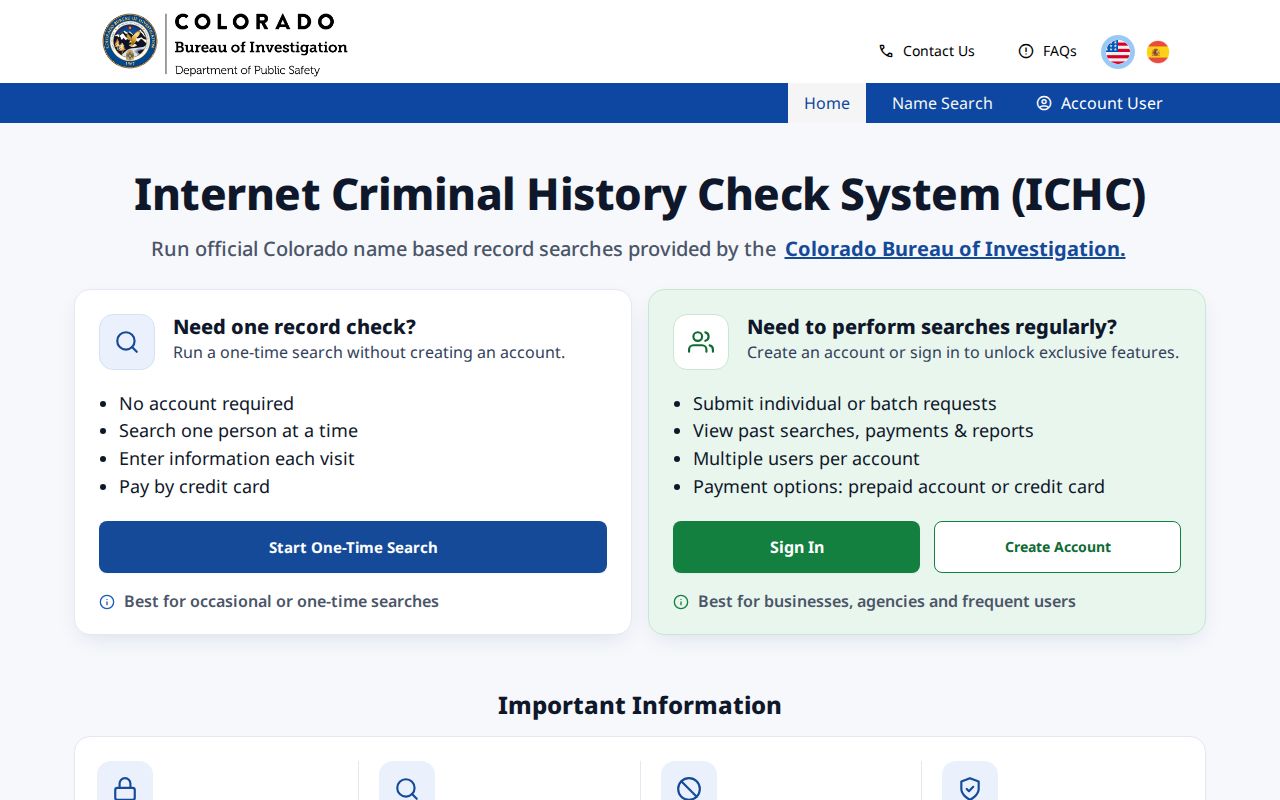
A negative result is not proof that no Teller County event exists. It can reflect publication limits, missing fingerprints, or a municipal citation that never created a state arrest cycle.
Types of Criminal Records in Teller County
An incident report describes what an officer documented. A booking file shows jail intake. The court file records what prosecutors filed and how each count ended. CBI CHRI groups fingerprint-linked arrest cycles and reported outcomes. These Teller County records overlap, yet none should be used as a substitute for the others.
Warrants come from a judicial officer and may require confirmation with the issuing court or sheriff because Colorado has no complete public statewide warrant portal. Teller jail records cover local custody, while CDOC information covers state sentences and parole status. Detailed probation and parole supervision files remain restricted even when a public judgment shows the sentence.
- Arrest and booking: agency allegations and jail intake, not proof of guilt.
- Court case files: filed charges, hearings, pleas, orders, outcome, and sentence.
- CBI CHRI: statewide fingerprint cycles paired with outcomes that agencies reported.
- Warrants: judicial process confirmed through the issuing court or law enforcement.
- Custody and supervision: jail, CDOC, probation, parole, and registry records with distinct access rules.
Teller County Booking Charges Change
A Teller County booking charge records what the receiving jail was told at intake. It is not the prosecutor's final charging choice. The Fourth Judicial District Attorney may file different counts, amend a count, or decline one after reviewing the report. A summons can also create a court case without any jail booking. That is why a current custody screen, a police report, and a court register can all describe the same event in different ways without one of them being false.
Trace the event in order. The arresting agency holds the narrative and alleged arrest charges. Teller County Detention Facility holds intake, bond, hold, and release or transfer data. The Combined Court holds the complaint or information, hearings, pleas, disposition, and sentence. CBI may later connect the fingerprint arrest cycle to a reported outcome. If the outcome is missing from CHRI, obtain the official court document first and use CBI's record challenge or disposition-update channel.
- Booking charge
- The allegation recorded during jail intake.
- Filed charge
- The count formally placed before the court.
- Disposition
- The outcome attached to an individual charge.
- Register of actions
- The court's chronological case summary.
Never treat one case-wide label as the result for every count. Teller County criminal cases can contain a conviction on one count and a dismissal on another.
Teller County Warrant Fallback Chain
No official public Teller County all-warrant database was verified. Call TCSO at 719-687-9652 for its verification and resolution instructions. State-case warrants should also be checked with Teller Combined Court. A city bench warrant may instead belong to Woodland Park or Cripple Creek Municipal Court. Ask the record custodian for releasable supporting material, then confirm clearance with the court that issued the warrant.
A jail search proves present custody only. It does not prove that no warrant exists. Sealed, search-warrant, and juvenile material may not be public. An in-person inquiry may also expose the person to arrest, so do not assume the request is anonymous. The safe path is to follow the agency's instructions and seek legal advice when the matter is personal and unresolved.
What a Teller County Criminal Record Shows
A CBI record begins with identity data and then lists fingerprint-linked arrest cycles. A Teller court register is case-centered and chronological. A booking record is custody-centered. Read the product label before drawing a conclusion, and match the final outcome to each individual charge count.
| Name & Identifiers | Legal name, aliases, birth data, and other demographic identifiers available in that product. |
|---|---|
| Arrest / Booking Data | Arrest date, agency, intake time, booking charges, holds, bond, and release or transfer data. |
| Charges & Statutes | Alleged offenses at arrest or counts formally filed by the prosecutor. |
| Disposition | Dismissal, deferred judgment, acquittal, conviction, or another result for each count. |
| Sentence | Custody, probation, restitution, fines, or other terms ordered by the court. |
| Custody / Supervision Status | Local jail, CDOC reception, parole clues, or the public judgment establishing probation. |
Teller County Custody Can Move
A person may leave the Teller jail roster after release or transfer. That disappearance does not erase the booking. Check the CDOC Offender Search if a state sentence or transfer is possible, and use the federal Bureau of Prisons locator when the case is federal. A short delay can occur while a receiving system processes the person.
The official CDOC locator shows the state-custody search route available to Teller County readers.
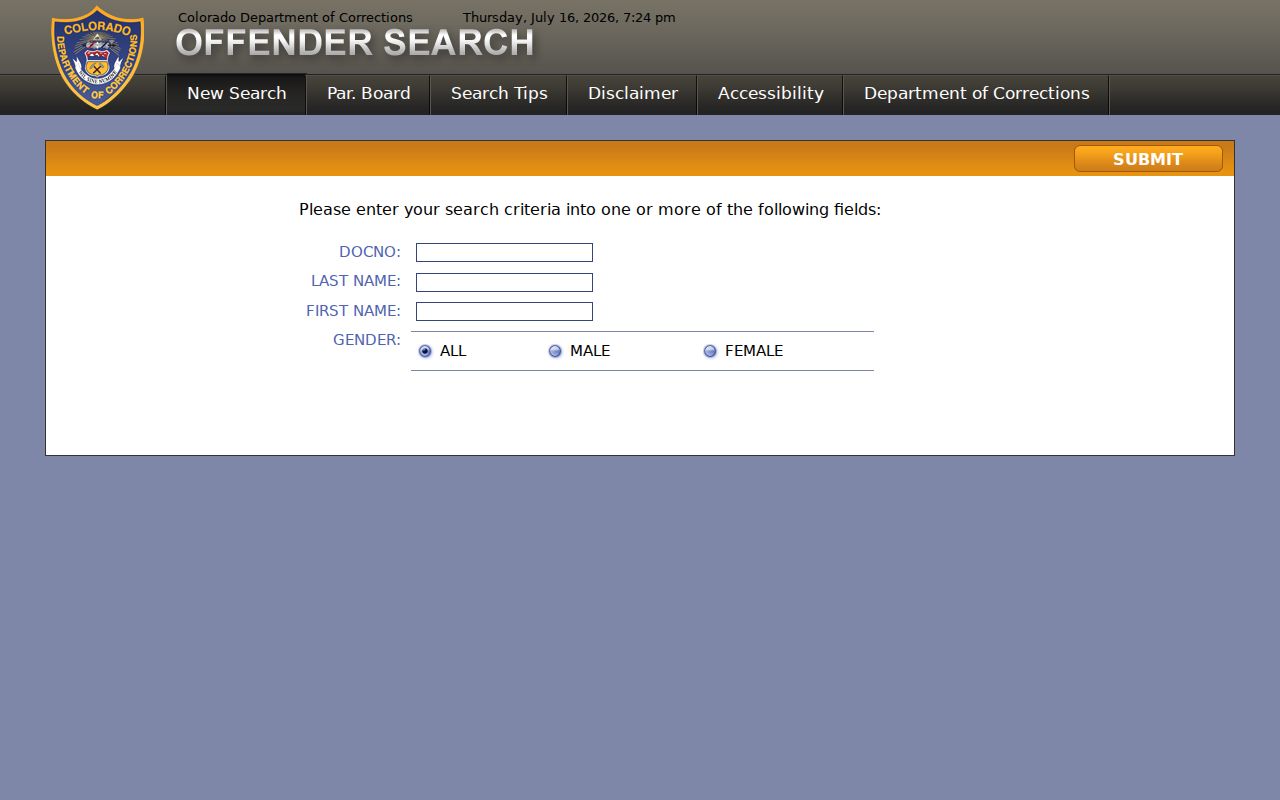
Probation is different from parole. Fourth Judicial District Probation supervises a court sentence in the community, while CDOC supervises parole after prison release. The public court judgment or ROA is the best first source for probation; detailed case notes are not a public database.
Public Access Laws for Teller County Criminal Records
Colorado separates general administrative access under CORA from criminal-justice access under CCJRA. The custodian decides whether protected material must be redacted or withheld. Court records follow Chief Justice Directive 05-01, which assigns public, protected, restricted, suppressed, and sealed access levels. A public docket entry therefore does not make every attachment downloadable.
Key Colorado rules:
C.R.S. § 24-72-303 requires official-action records to be maintained and open for inspection.
C.R.S. § 24-72-304 governs inspection and reasonable fees for other criminal-justice records.
C.R.S. § 24-72-305 supplies grounds to deny access when law, court orders, or public interests require it.
Chief Justice Directive 05-01 classifies access to Colorado court records.
Teller County Report Requests
TCSO is custodian only for records it made or holds. Start from the sheriff's Records Request link and describe the report number, date, place, people involved, and precise product sought. The ordinary CORA response norm is three working days, with a possible seven-working-day extension when qualifying circumstances exist. Criminal-justice records are reviewed under CCJRA, and active investigation, juvenile, victim, witness, medical, and protected identity details may be redacted.
Woodland Park and Cripple Creek use their own police forms and prices. Victor contracts law enforcement to TCSO, so a Victor incident request goes to the sheriff. Do not send a city police report request to the county merely because the person was booked at Teller County Detention Facility.
Sealed, Expunged, and Restricted Records
Record sealing is Colorado's main remedy for adult arrest and conviction records. Expungement is used chiefly for juvenile and other narrow contexts. Teller County filers should identify each case and arrest number, choose the correct statute and Judicial Branch form, file in the Teller Combined Court for a Teller state case, list every custodian, and follow service or hearing instructions. A signed order must reach CBI as well as the clerk and named agencies.
A qualifying non-conviction petition under section 24-72-705 has no court fee. Research lists $224 for a section 24-72-704 petition and $65 for a qualifying conviction-sealing motion under section 24-72-706; verify the current fee schedule before filing. Sealing restricts ordinary public access but does not promise destruction or eliminate authorized justice-agency access. The Judicial Branch's sealed-case verification tool is for the defendant, not public searching.
Teller County Registry Has Limits
The Colorado public portal does not display the complete registry. It omits people posted solely for misdemeanor sex convictions and juveniles adjudicated for sex offenses. Qualifying public categories include sexually violent predator, multiple offender, felony conviction, and failed-to-register history. The categories overlap, so their counts must not be added as unique people. Name and birth data still do not positively identify a person.
The Colorado Sex Offender Registry guidance explains public scope, list requests, and use limits.
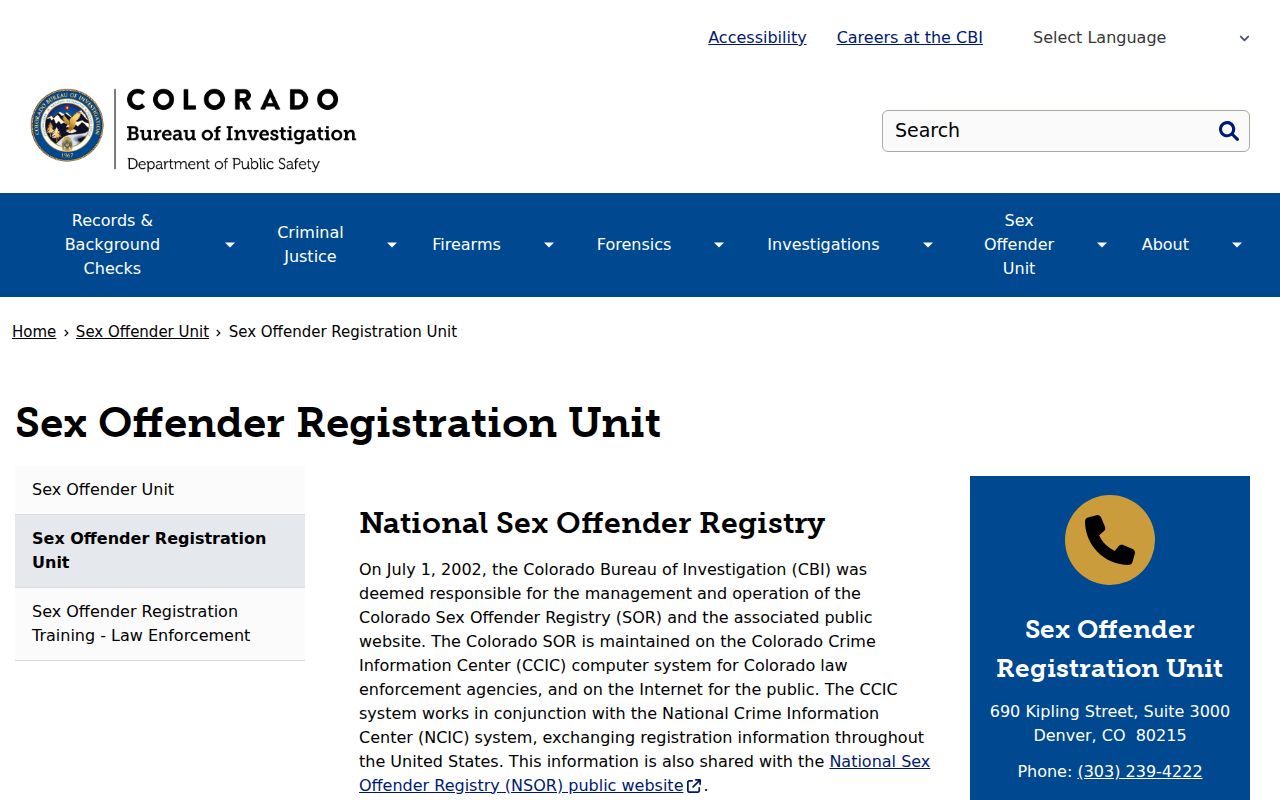
Woodland Park and Cripple Creek police handle registration inside their cities. TCSO handles Victor and unincorporated Teller County. Registry data supports awareness, not confrontation or retaliation.
Criminal Records by City in Teller County
Teller County has three incorporated cities. Woodland Park and Cripple Creek have police departments and municipal courts, while Victor contracts policing to TCSO and retains a small municipal court. Each city's law-enforcement custodian differs even though custodial arrests route to the county jail. The cards below lead to city-specific request forms, court counters, venue rules, and booking routes.
In Woodland Park, use the police department's separate forms for nontraffic reports and traffic crashes. Its municipal court handles city charter, ordinance, and qualifying traffic or criminal matters, but DUI, driver-license, registration, and plate cases route to Teller Combined Court. Cripple Creek Police accepts its own online request and prices a short paper report differently from audio, video, or an extensive media review. A Cripple Creek citation can land in municipal court or Combined Court, so the ticket heading controls the search.
Victor has no city police department or police-record portal. TCSO provides contract law enforcement and holds the incident record, while the Victor City Clerk maintains municipal summons files. Both functions operate from City Hall, yet they remain separate custodians. A custodial arrest from any of the three cities reaches Teller County Detention Facility in Divide. A summons may stay with a municipal court and never create a jail booking. Those venue and custody differences are why a city name alone cannot identify the right Teller County criminal record system.
Woodland Park Criminal History
7,920 · City police records, municipal court, and county jail routing
Cripple Creek Criminal History
1,155 · CCPD request form and two-court citation routing
Victor Criminal History
379 · TCSO contract policing and Victor Municipal Court